Paint protection film
Full Front vs Full Body PPF: What Stays Bare
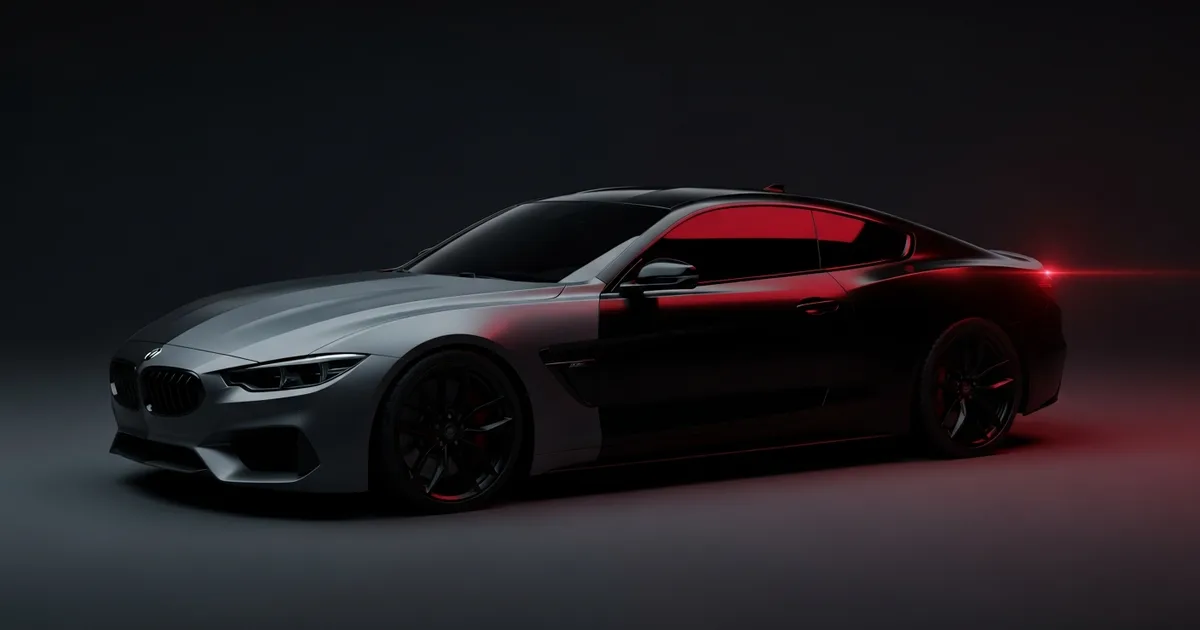
The short version
- Full front films the panels that meet the road first: front bumper, hood, both front fenders, mirrors and, at most shops, the headlights.
- Full body adds the doors, rockers, roof, quarter panels, trunk and rear bumper, so no film edge is left out in the open.
- Shops draw the line in different places: one installer’s full front also takes the A-pillars and rockers, so read the panel list.
- Three questions pick the tier: what roads and how many miles, how long the owner keeps the car, and whether chips or a visible edge bother them more.
- The step up is mostly more feet off the roll and more hours. Price both from the roll and show them as two options on one quote.
Paint protection film7 min readUpdated
Where the line between the two packages falls
Full front vs full body PPF is a question about one line on the car: where the film stops. Capital Wrappers defines its full front as the complete hood, both front fenders, the front bumper, the side mirrors and the headlights, every surface that faces oncoming road debris at speed. Its full vehicle takes every exterior painted panel, doors, quarter panels and rear bumper included.1
Not every shop draws it there. Tinterz’s “full front end” already reaches the A-pillars and rocker panels, and the A-pillars and rockers are in Capital Wrappers’ separate track package.1,2 When a customer brings in another shop’s quote, the panel list is the first thing to compare.
What the back half of the car gets from film
The panels behind the windshield meet the road at an angle, so they pick up fewer stone strikes than the hood. They still take damage of other kinds. Door edges get opened into other cars. Rockers and the leading edge of the rear quarters catch grit thrown by the car’s own front tires. The roof and trunk see bird droppings and sun more than stones. Full body is the only package that answers for all of it, and it is the only one where the customer has no film edge to look at.
On a garaged weekend car that leaves the back half mostly cosmetic. On a daily driver on gravel shoulders, the rockers and rear quarters are worth a line on the quote even when the customer stops short of full body.
The film edge, and who notices it
With full front, the film ends somewhere a person can see: across the fender behind the wheel, or along the A-pillar. A good install wraps the edge around a panel lip or into a gap wherever the panel allows it, which hides most of the line. It does not hide all of it. On white, silver and light metallics the edge is hard to find. On black and dark gray it can catch the light up close.
Tell a dark-car owner before they book, and show them the edge on a car in the bay if you have one. For an owner whose objection is “I do not want to see where it ends”, full body is the answer to the question they asked.
Three questions that pick the tier
- What roads, and how many miles? Highway miles behind trucks push toward more coverage. Short city trips rarely justify the rear panels.
- How long will you keep it? An owner keeping the car for years gets the edge-free look for longer. A two-year lease is often better served by the front alone.
- What bothers you more, chips or a visible edge? “Chips” points to full front. “The edge” points to full body.
Then recommend what the answers point to, including when that is the smaller package. For a buyer weighing whether film is worth it at all, send them our car-owner page on is PPF worth it.
Pricing the step from front to body
The gap in price between the tiers is film and time. Full body pulls far more feet than a full front, and doors, roof and quarters are slow panels. Published installed prices for both tiers, by vehicle class, are on our page answering how much does PPF cost; a customer can try their own car in the PPF cost calculator.
Example. On a roll at $34.00 a foot, an 18-foot full front carries $612 of film. If the same car’s full body pulls 70 feet, the film alone is $2,380 before an hour of labor. The 70 is an example; count your own feet from your patterns.
In our PPF shop software, one quote can carry both tiers as a “customer picks one” group, each option a package of several services at one price. The customer chooses on the quote, and the margin on each option is visible to you before it is sent. The method behind the numbers is in our guide on how to price a PPF job. Run each tier through the calculator below, or on the PPF margin calculator page. The figures a car owner sees for the front alone are in what a full front PPF costs.
Reader-driven estimate from your own numbers — not a guarantee.
Enter the film cost per foot, the feet and the hours for a full front, then run it again for a full body.
What the quote cannot decide for you
Service VIN does not recommend a coverage tier and does not know how many feet a full body takes on a given car. The panels in each option and the feet on each line are the shop’s to enter.
Sources and notes
Where the panel lists came from
Facts checked
- 1.Capital Wrappers, 2026 pricing guide: full front covers “the complete hood, both front fenders, front bumper, side mirrors, and headlights”, every surface “that faces oncoming road debris at speed”; full vehicle covers all exterior painted panels, including doors, quarter panels and the rear bumper; a track package adds the roof, A-pillars and rocker panels. Read 2026-11-15, method: direct page read. capitalwrappers.com
- 2.Tinterz, PPF pricing breakdown: its full front end adds headlights, fog lights, A-pillars and rocker panels to the hood, bumper, fenders and mirrors; full body is every painted panel, bumper to bumper. Read 2026-11-15, method: direct page read. tinterz.net
- 3.Service VIN, quote packages: a “customer picks one” group on a quote holds options, each a package of several services at one price (src/lib/quotes/packages.ts; docs/rules/quote-packages.md). Sample roll cost of $34.00 a foot and an 18-foot full front: src/app/software/ppf/landing.tsx:228-230. Service VIN PPF page
Package names are not a standard. Each shop defines its own; ask for the panel list.
Frequently asked questions
Is full body PPF worth it over full front?
For a car driven hard on highways and kept for years, or an owner who does not want to see a film edge, often yes. For a short lease or mostly city driving, full front covers the panels that take most stone chips for a fraction of the film and hours.
What does full front PPF cover?
Usually the whole hood, both front fenders, the front bumper and the mirrors, and at most shops the headlights. Some shops also include the A-pillars and rocker panels. Ask for the panel list on the quote.
Can you see where full front PPF ends?
The edge is wrapped into gaps and around panel lips where the panel allows it, so on light paint it is hard to find. On black or dark gray it can show up close in sunlight. Full body has no exposed edge on the paint.
Can I add rocker panels without doing the whole car?
Yes. One Maryland installer sells rocker panels inside its track package and also prices rocker panels and door edge guards as single panels. Ask your shop whether it quotes panels one at a time.

The Service VIN team
Built inside a working PPF and detailing shop in Canada
The team that builds Service VIN runs it every day inside a working PPF and detailing shop in Canada, the shop it was built for. These posts are written from that shop floor, for owners who want less time at the desk and more time running the business.