Paint protection film
How Self-Healing PPF Heals, and Where It Stops
The short version
- Self-healing PPF has an elastic topcoat that flows back into a light scratch when it warms up.
- Sun, a warm panel, engine heat or warm water sets it off, according to SunTek; STEK names heat or hot water.
- On XPEL Ultimate Plus that topcoat is 12 µm of a 193 µm film, so only a scratch inside it heals.
- A cut into the polyurethane below, a rock chip or a tear does not heal.
- Demonstrate it on scrap film with a fingernail mark and a warm cloth, and promise wash marks and light swirls, nothing deeper.
Paint protection film6 min readUpdated
A thin layer that remembers its shape
Self-healing PPF is ordinary polyurethane film with a topcoat made to move. XPEL’s data sheet describes elastomeric polymers in that topcoat that let light scratches in the surface heal over time.1 SunTek says the top coat protects the urethane against surface damage and repairs most scratches with heat.2 STEK lists “self-healing from minor scratching” on its sheet.3
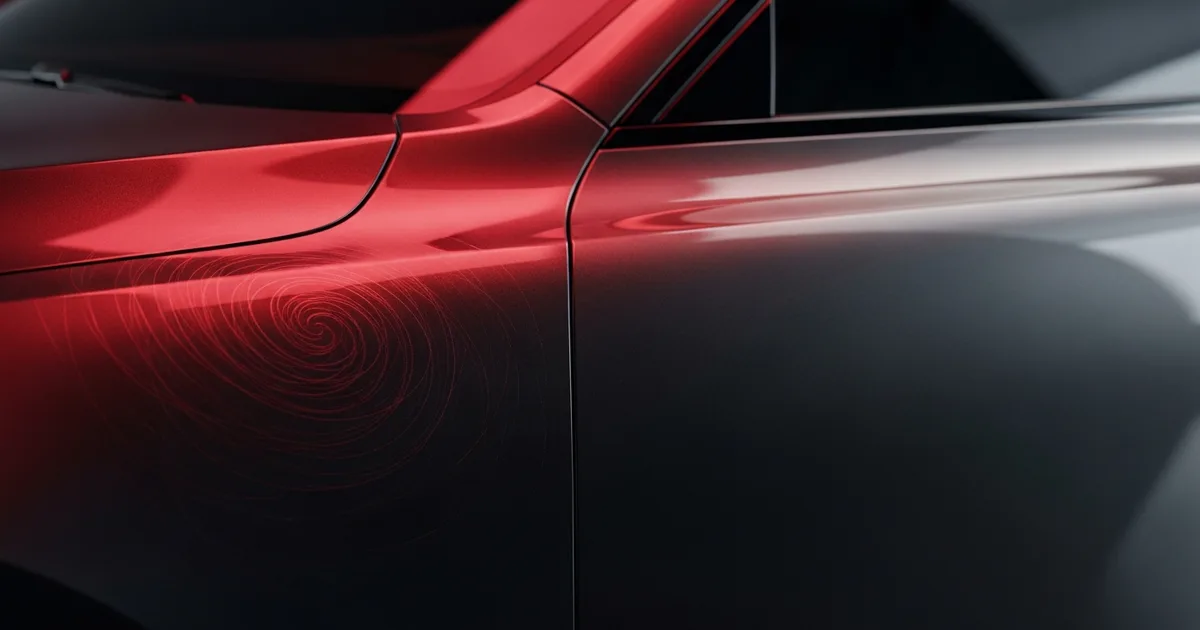
The key word in all three is surface. A light scratch pushes the topcoat aside without cutting through it. Warm the film and the polymer softens, flows back into the groove and settles flat, and the scratch stops catching the light.
How deep a scratch can go and still heal
XPEL publishes the layer depths for Ultimate Plus: a 12 µm topcoat on 152 µm of polyurethane.1 That topcoat is about a sixteenth of the film. A wash swirl or a fingernail mark sits inside it. A key scratch, a stone strike or a cut from a blade goes past it into the urethane, where no maker claims healing.
The film still did its job on the deep one: the paint under it is untouched. The fix is a new piece of film on that panel. For the term itself, the glossary entry on self healing film is the short version.
What sets the heal off
Heat, from almost any source. SunTek names the sun, a warm body panel, engine heat and warm water. STEK names heat or hot water.2,3 In practice that means a car parked in the sun often clears its own wash marks, and a cold car in winter keeps them until it is warmed.
None of the three makers publishes a heal time, so we print none. It depends on the scratch and the warmth, and a shop that promises “gone in seconds” is promising something the maker did not.
- 1
The mark pushes the topcoat aside
A light scratch dents the elastic top layer without cutting through it.
- 2
Heat reaches the film
Sun, a warm panel, engine heat or warm water.
- 3
The polymer flows back
The softened topcoat fills the groove.
- 4
The surface reads flat
Light reflects evenly and the mark is gone from view.
The order of events the makers describe. No times are published, so none are shown.
Self-healing film and ceramic coating
They are different products that get sold together. Film is a physical layer that takes stone strikes; its topcoat heals light scratches. A ceramic coating is a thin chemical layer for gloss and easier washing. SunTek puts a coating’s life at roughly 1 to 4 years, and sells a film, Reaction, that pairs film with coating properties under a 12-year limited warranty.2 STEK’s DYNOshield topcoat is itself ceramic-infused.3
STEK extends its film warranty when its own coating goes on top. Which films carry which terms is set out in our comparison of PPF film brands by their spec sheets.
Showing it to a customer without overselling
Keep a piece of scrap film on a painted panel at the counter. Mark it lightly with a fingernail, then pour warm water over it or hold a warm cloth on it, and let the customer watch the marks fade. Then say the limit out loud: this is for wash marks and light swirls; a deep scratch or a chip through the film means a new piece on that panel.
Care decides how long the topcoat keeps working. SunTek’s own care notes for Ultra are hand washing, a non-abrasive wax once or twice a year, and no automatic car washes or high-pressure spray at the edges.2 Our car-owner page on how to wash a car with PPF is the version to send home with the keys.
In our PPF shop software, the film product goes on the warranty certificate, so the customer’s paper names the film whose topcoat you demonstrated.
Where the software stops
Service VIN records which film went on the car. It does not hold a maker’s heal specification and cannot tell you whether a mark a customer reports will heal. That is a look at the panel, in the bay.
Sources and notes
Where the mechanism and the layer depths came from
Facts checked
- 1.XPEL Ultimate Plus technical data sheet: a clear-coated polyurethane film whose topcoat uses elastomeric polymers that allow light scratches in the surface to heal over time; topcoat 12 µm (0.50 mil) over 152 µm (6.0 mil) of polyurethane. Read 2026-11-15, method: PDF read. XPEL data sheet (PDF)
- 2.SunTek PPF frequently asked questions: each film has a top coat that protects the urethane against surface damage, and the self-healing surface repairs the majority of scratches using the heat of the sun, a warm body panel, engine heat or warm water; ceramic coating life expectancy approximately 1 to 4 years; Reaction PPF pairs film with ceramic-coating properties under a 12-year limited warranty. Read 2026-11-15, method: direct page read. suntekfilms.com FAQ
- 3.STEK DYNOshield page and data sheet: self-healing by heat or hot water; “self-healing from minor scratching”; a nano-ceramic-infused hydrophobic top coat bonded to the film as a liquid. Read 2026-11-15, method: direct page read and PDF read. stek-usa.com
Frequently asked questions
How does self-healing PPF work?
The film’s topcoat is made of elastic polymers. A light scratch pushes the topcoat aside without cutting through it, and when the film warms up the polymer flows back and settles flat. On XPEL Ultimate Plus that topcoat is 12 µm thick, per XPEL’s data sheet.
What makes PPF self-heal?
Heat. SunTek names the sun, a warm body panel, engine heat and warm water; STEK names heat or hot water. A car parked in the sun often clears wash marks by itself.
Can self-healing PPF fix a rock chip?
No. A chip or a deep scratch goes through the topcoat into the polyurethane, where no maker claims healing. The paint under it is usually untouched; the fix is a new piece of film on that panel.
How long does self-healing PPF take to heal?
None of XPEL, SunTek or STEK publishes a heal time on the pages we read on November 15, 2026. It depends on the depth of the mark and how warm the film gets.

The Service VIN team
Built inside a working PPF and detailing shop in Canada
The team that builds Service VIN runs it every day inside a working PPF and detailing shop in Canada, the shop it was built for. These posts are written from that shop floor, for owners who want less time at the desk and more time running the business.