Shop operations
How to Hire a PPF Installer and Train Them
The short version
To hire a PPF installer, write down the standard a finished job must clear, look for steady hands and patience before a resume, and pay for a working trial on practice panels. Then train in order of difficulty, from prep to full fronts, and keep the person with pay that rises with skill.
- Write the standard first: it becomes the job post, the trial rubric and the training checklist.
- Hire for hands, patience and an eye for dirt; film technique can be taught.
- Pay for a working trial on practice panels and watch what happens when the film fights back.
- Train in order: prep, plotting and cutting, flat panels, compound curves, then full fronts.
- Keep a trained installer with pay that rises with skill and a bay that is not chaos.
Shop operations9 min readUpdated
When the shop stops whenever the owner does
Picture the morning the only person who can put film on a hood wakes up with a fever. Two cars slide a week to the right, a customer who drove in from out of town gets a call they did not want, and the bay sits empty because it cannot run without one pair of hands.
The decision to hire a PPF installer is the step from a job to a company, and it means handing the work that earns the next three jobs to someone else’s squeegee. The five steps below are the order we would run it in.
Five steps from job post to a trained installer
Define the role and the standard
Write down the work you need off your plate and the bar a finished job has to clear: tight edges, no lifting at the hood corners, no trapped dirt under the film, a clean wrap into the door jambs. A standard that lives only in your head cannot be trained to.
Source candidates where the traits already live
Detailers who chase a swirl-free finish, wrap hobbyists who have already fought vinyl round a mirror, trades people who are precise with their hands, and referrals from your film supplier are better wells than a general job board.
Run a paid working trial
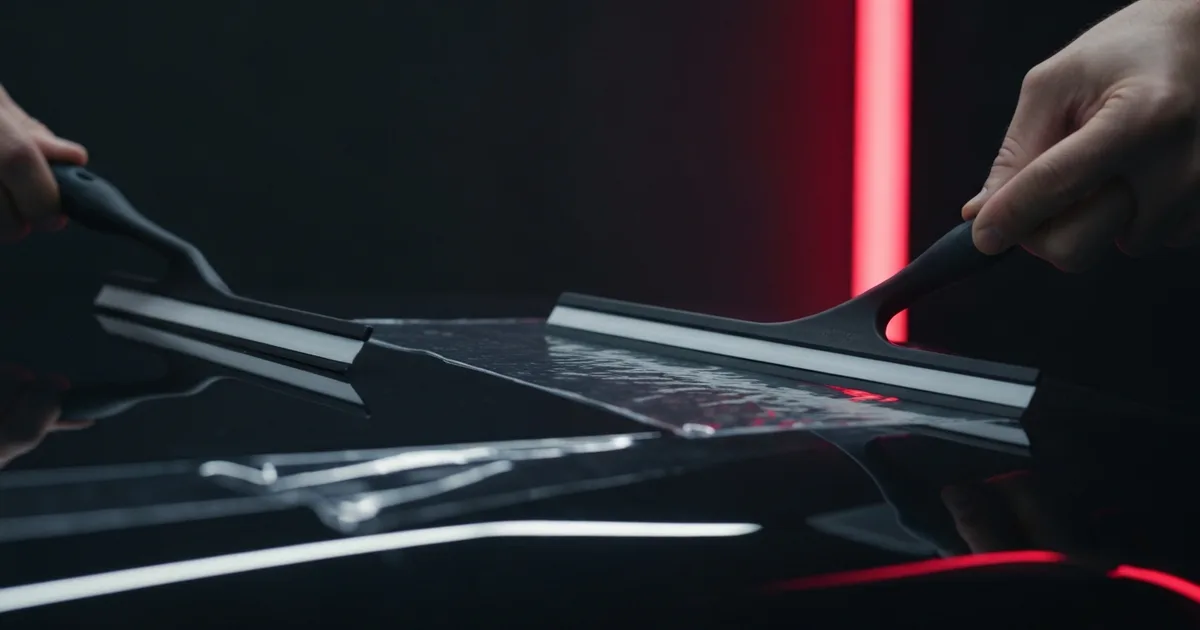
Put a squeegee in their hand on practice panels or a low-risk job, watch how they prep and plan a curve, and see how they react when the film fights back. Pay for the time.
Train in order of difficulty
Prep and decontamination, then plotting and cutting, then flat panels, then compound curves and full fronts. A stage is passed when the work clears the checklist without you standing over it.
Keep them once they are good
Pay that rises with skill, a visible path to harder and better-paid work, and a shop that is not daily chaos.
Write the standard before the job post
A first hire can fail before the first interview. The owner can feel a bad edge with a thumb and has not written down what a good one is, so the new person gets a car and a standard that only exists in somebody else’s head. That is a management miss, not the installer’s.
Spend an afternoon getting specific. What does a finished full front look like when it is right? How much lift at a hood corner is a redo and how much a touch-up? Where does the film wrap and where is it tucked? What counts as clean prep before the first sheet comes off the roll? The answers become the job post, the trial rubric and the training checklist, and they keep the shop’s own standard from drifting in a busy month. Car owners shopping for film ask the same questions; the page on how to choose a PPF installer lists what they look for.
The written role also settles what the hire is for: a prep hand who frees the owner for cutting, a second installer to double the bays, or someone to grow into running a bay. A vague “PPF installer wanted” brings in a vague pile of applicants.
Steady hands over a polished resume
Film technique is learnable on a predictable curve. Patience, steady hands and an eye that catches the speck before it is under the film are much harder to install in an adult who does not already have them. So hire for those first.
Detailers already know paint and decontamination, and half the job is prep. Wrap hobbyists like the puzzle. Trades people who have spent years being precise tend to ramp fast. The rep who sells you film talks to shops all day and often knows who is looking.
An experienced installer ramps faster and costs more, and usually arrives with habits, a way of squeegeeing or a shortcut on prep, that may not match your bar. That is fine as long as resetting some of them is part of the plan. Both paths go through the same trial.
What a paid trial day shows
An interview shows how well someone talks about film. A squeegee shows whether they can lay it. Run the trial for half a day or a day, on practice panels or a low-risk job, never a customer’s prized car on a deadline. Then stop talking and watch.
Do they prep like it matters, or rush to the fun part? Do they plan a compound curve before committing the film, or start pulling and hope? And the tell that matters most: when a corner lifts or a piece of dirt shows up late, do they force it or slow down and work the problem? Film fights back every day, and that reaction is the job.
Pay for the trial. It is their labor, and paying says the shop is run properly, which is the kind of shop good people want to join. They are auditioning you too: an organized bay, a written standard and a boss who explains instead of barks is what makes the good ones lean in.
- 1
Prep and decontamination
Wash, clay, decon and panel prep to a tack-free standard.
- 2
Plotting and cutting
Plotted patterns, film handling and blade-safe trimming.
- 3
Flat panels
Mirrors and flat sections, to build confidence one panel at a time.
- 4
Compound curves
Fenders, hoods and the tension-and-tuck work.
- 5
Full fronts
A complete job, start to finish, to the written standard.
An order of work with no measured durations: the safest work first, the skill that separates installers last.
The training ramp, stage by stage
The urge is to hand a new hire a full front to see what they have. The faster route is the slower-looking one: easiest work first, and each stage owned before the next is earned. Owning a stage means the work clears the checklist without anyone hovering.
| Stage | The work | Passed when |
|---|---|---|
| 1. Prep | Wash, clay, decontamination, panel wipe-down | Panels go to the installer tack-free, with no rework |
| 2. Plot and cut | Running plotted patterns, handling film, blade-safe trimming | Patterns come off the plotter and out of the bay unmarked |
| 3. Flat panels | Mirrors, flat sections, simpler bumpers | Edges sit down and the checklist clears on the first look |
| 4. Compound curves | Fenders, hoods, tension and tuck | No lift lines or fingers after the film settles |
| 5. Full fronts | A complete job, start to finish | The whole job clears the written standard with no rework |
Prep comes first because installs are won or lost there and it is the safest place for a new hire to be useful on customer cars in the first week. Moving someone onto a full front before they have earned it produces rework and costs them confidence.
One habit shortens the ramp: a photo of every stage of every job from the first day. Reviewing at the bench against a photo, pointing at the exact edge, lands harder than “be more careful”, and the new installer sees their own progress stack up.
Keeping a trained installer
Months of training walk out the door with a trained installer who leaves, plus the rework and lost bay time while someone new ramps up. People leave for money and for sanity, so protect both.
On money, tie pay to growing skill and make the path visible: the move from flat panels to full fronts should show up on the check. The choices between hourly, piece rate, commission and a base plus bonus are laid out in the post on which detailer pay structure fits a shop. On sanity, double-booked bays, jobs no one mentioned and a schedule that changes six times before lunch push a good installer toward the shop down the road. A calm, assigned day keeps people better than a break-room perk.
Where this first hire fits in a growing business is the subject of the guide on how to start a PPF business.
What the software does for a new hire, and what it leaves to you
In Service VIN the new installer goes on the roster with their skills, certifications and weekly hours, and the scheduler assigns from that roster. Their login carries a role that decides what it opens, and pay rates sit with owners and admins, so a technician sees their own pay and nobody else’s. A certification inside 60 days of expiry shows as expiring and the manager is alerted. Each person’s labor is counted into the margin of the jobs they work. That is the team management for auto shops side; the installer app for PPF and tint shops gives the new hire the job’s checklist, a stopwatch on each line and the photos the job asks for.
Its limits for a first hire: the installer app opens in the phone’s browser and is added to the home screen, because the native app is not in the app stores yet. Essentials includes three team logins, and logins are unlimited from Growth up; a contractor can be rostered with a per-job payout and no login. And the software does not find, interview or train anyone. The standard, the trial and the ramp are the shop’s work; the PPF shop software keeps the record of who did which job, and how long it took.
Frequently asked questions
Should I hire an experienced PPF installer or train someone new?
Both work. An experienced installer ramps faster, costs more and may bring habits you will reset to your standard. Someone with steady hands and patience takes longer and more of your time up front, and ends up trained to your bar. Run a paid working trial either way.
How long does it take to train a PPF installer?
There is no fixed timeline. It depends on the person, how much film the shop installs and how deliberately the training runs. A ramp from prep to full fronts, with each stage passed before the next, is what keeps it short without creating rework.
What should I watch for in a trial day?
How they prep, whether they plan a compound curve before committing the film, and what they do when a corner lifts or dirt shows up late. Slowing down to work the problem is the sign you want.
How do I keep a good installer from leaving?
Pay that rises with skill, a visible path to harder work, and a calm, organized bay. Installers leave for money and for sanity, so protect both.

The Service VIN team
Built inside a working PPF and detailing shop in Canada
The team that builds Service VIN runs it every day inside a working PPF and detailing shop in Canada, the shop it was built for. These posts are written from that shop floor, for owners who want less time at the desk and more time running the business.