Window tint
How to Offer Windshield Tint Within the Law
The short version
Windshield tint is the most restricted film on a car: most statutes allow only a strip across the top, measured from the AS-1 mark etched in the glass. Read the windshield clause where the car is registered, offer the brow strip inside it, and put it on the quote as an add-on the customer ticks at approval.
- Read the windshield clause first. Florida’s, read November 15, 2026, allows only a transparent strip at the top that stays out of the AS/1 area.
- The brow strip is the add-on most statutes leave room for; it cuts low-sun glare and matches the side glass.
- Clear film across the whole windshield is legal in some places and refused in others, so check the clause before offering it.
- Put the strip on the quote as a tick-box add-on, so the offer is made on every quote whoever builds it.
Window tint6 min readUpdated
Start with the clause
Windshield tint is where most tint tickets start, because the windshield clause is the strictest part of any statute. Before a strip or a clear film is mentioned, read what the law for the car’s registration allows on that glass. The parts of a statute are set out in how to read window tint laws.
Florida’s clause, section 316.2952, read on the Florida Legislature’s site on November 15, 2026, is a typical shape: sunscreening material is allowed only “along a strip at the top of the windshield”, it must be transparent, and it may not encroach on the driver’s forward view defined in Federal Motor Vehicle Safety Standard 205 as the AS/1 portion. The AS-1 mark etched near the top corner of most windshields is the line installers work to. Other statutes use a measured distance from the top edge instead, and some say more or less; one state’s wording is an example, never a rule for the car in your bay.
The brow strip
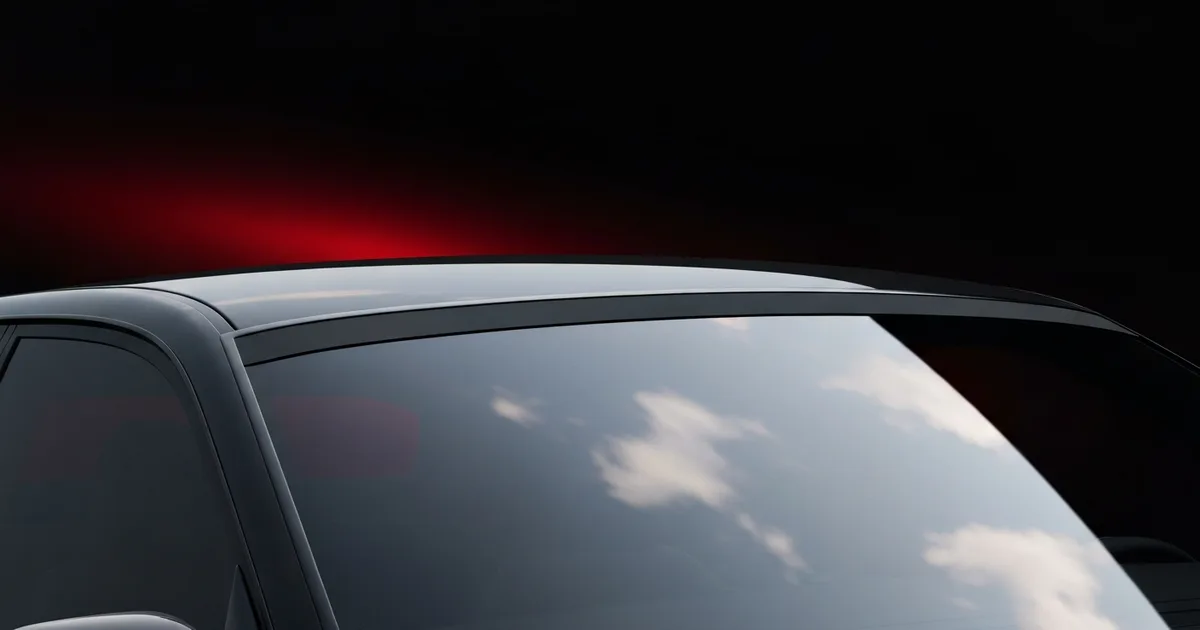
The strip across the top of the windshield, called a brow, eyebrow, visor strip or sunstrip, sits in the band most clauses allow. It cuts the low sun that has a driver reaching for the visor on the commute, and it finishes the look of a car whose side glass was just tinted.
Its cost to the shop is small when the car is already in the bay for side windows: the glass is clean, the slip solution is mixed and the installer is on the job. That is why it belongs on the same quote as the main work, priced as its own glass set. How each glass set is priced from cost is in how to set a ceramic tint price.
Clear film across the whole glass
Some jurisdictions allow a clear or near-clear film over the full windshield, and some do not allow any film below the strip. Florida’s clause, for one, allows only the strip. Where a full-glass film is allowed, the case for it is heat and ultraviolet: a ceramic film can reject infrared without darkening the glass much. Quote the figures published for the film you install, from its own maker’s sheet, and say which glass they were measured on. The constructions behind those figures are compared in ceramic vs carbon tint.
- 1
Read the windshield clause
For the state or province where the car is registered: strip only, a measured band, or clear film allowed.
- 2
Add the strip to the quote
As its own glass set, priced from cost, with a one-line reason tied to what the customer said.
- 3
The customer ticks it or leaves it
On the quote they approve. The approved total includes what they chose.
- 4
Install with the side glass
Same visit, same bay, same slip solution. No second appointment.
- 5
Look at the month
Strips sold on the quote against strips added at drop-off show where the offer is made.
An order of work for a side-window job. The strip is offered once, on the quote, and recorded either way.
On the quote, ticked at approval
A strip that depends on someone remembering to mention it at the counter gets mentioned on quiet days. On a Service VIN quote, the strip can be an add-on the customer sees under the main work and ticks when they approve; what they tick becomes part of the approved quote and the totals follow. The offer is made on every quote that carries it, whoever built the quote and however busy the bay was.
Tie the line to what the customer said. If they mentioned glare on the drive in, the add-on’s one-line description says it cuts low-sun glare. Texts from the shop carry no link right now, so the quote goes by email and the text says it is there. Quoting each glass set and add-on this way is the model behind window tint shop software.
Counting what gets added
A priced line added to a job after the customer dropped the car off is recorded as an upgrade, with the name of the person who sold it, and there is a report of them. A strip ticked on the quote is booked work; one added at drop-off counts as an upgrade. Comparing the two over a month shows whether the offer is landing on the quote or only when someone remembers at the counter.
What Service VIN does not do: it holds no table of windshield rules and does not check a strip or a full-glass film against the law for the car. The clause is the shop’s to read. Owners asking what to expect from a tint shop can be pointed to questions to ask a tint shop.
Frequently asked questions
Is windshield tint legal?
Usually only a strip across the top. Florida’s statute, read November 15, 2026, allows a transparent strip at the top that stays out of the AS/1 area named in federal standard 205. Other states and provinces word it differently, so read the clause for the car’s registration.
What is a brow or visor strip?
A band of film across the top of the windshield, inside the area most windshield clauses allow. It cuts low-sun glare and matches the tinted side glass.
Can clear film go on the whole windshield?
In some places a clear or near-clear film is allowed; in others nothing may go below the strip. Check the clause first, and quote the published heat and ultraviolet figures of the film you install.
When should the strip be offered?
On the quote for the side windows, as an add-on the customer ticks when approving. The car is already booked into the bay, so the strip adds minutes to a job that is happening anyway.

The Service VIN team
Built inside a working PPF and detailing shop in Canada
The team that builds Service VIN runs it every day inside a working PPF and detailing shop in Canada, the shop it was built for. These posts are written from that shop floor, for owners who want less time at the desk and more time running the business.